



Reducing Slip-and-Fall Risk with Commercial Floor Care
Safer Floors, Fewer Claims, Stronger Bottom Line Slip-and-fall accidents hit hard. They hurt people, slow down operations, and can turn into big...
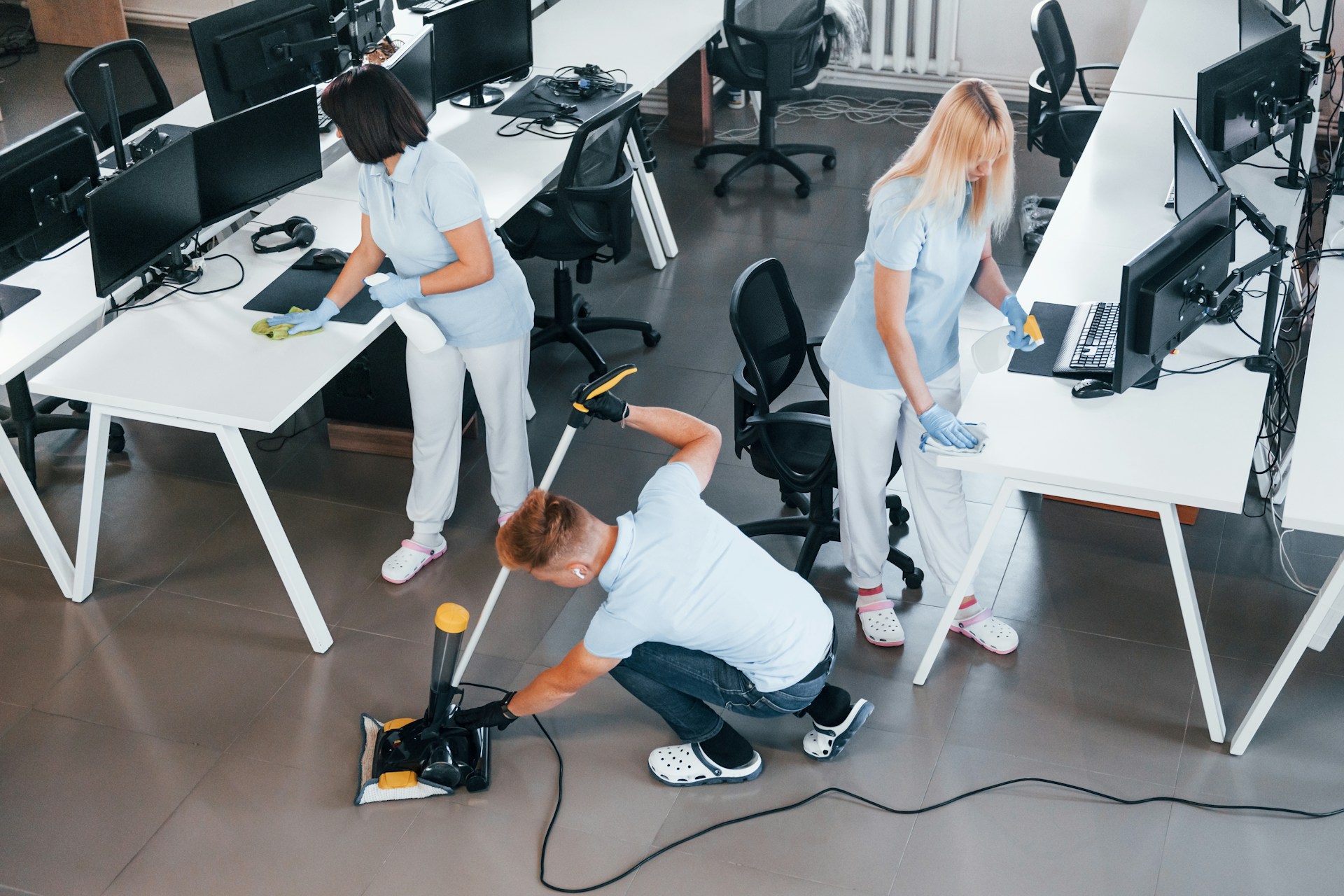
Commercial cleaning staff schedules can make or break a high-traffic facility. When cleaning hits at the wrong time, you see dirty restrooms, cluttered entrances, and floors that feel unsafe. When it hits at the right time, spaces feel clean, calm, and ready, even during the busiest part of the day.
For retail, healthcare, industrial, and distribution sites, traffic is constant. Footprints, carts, spills, and trash show up fast. Seasonal spikes and Q4 volume only add pressure. That is why cleaning schedules cannot be just a basic calendar. They are a core part of operations, right beside the staffing, stocking, and safety.
In this article, we walk through how to line up commercial cleaning staff with traffic patterns, manage multi-site locations, and use data and technology to keep standards high. Our team at Cleaning Services Group, Inc. works with multi-site facilities across the United States, and we see every day how smart scheduling protects both people and brands.
Good scheduling starts with knowing the rhythm of each site. Every building has its own flow. You need to see when people arrive, when they leave, and when spaces sit empty.
Key traffic rhythms to understand include:
To learn that rhythm, we suggest mixing data with on-the-ground input. Useful sources can include:
Once you have this information, you can block time for the right type of cleaning. During heavy traffic, commercial cleaning staff should focus on quick hits, like:
During off-hours or low-traffic times, you can schedule:
Floaters or flex staff can be planned around expected surges, such as local events, store promotions, or heavy shipping days.
After you understand the traffic rhythm, you can design the staffing plan. This is where you choose how many cleaners you need, what skills they should have, and when they should be on site.
A strong plan looks at:
Role clarity matters a lot. Instead of everyone doing a bit of everything, it is often better to assign clear zones, such as:
Each zone should have clear task lists and frequencies that match:
Contingency planning is also part of a strong staffing plan. Things change. People get sick. Weather hits. A shipment shows up late. To handle this, we like to see:
Multi-site operations bring an extra layer of challenge. A group of stores, clinics, or warehouses can have shared standards but very different daily patterns. One location might open early, another late. One may be in a quiet area, another in a busy city center.
You need a plan that balances consistency and local flexibility. That often means:
A central plan might define:
Local teams then adjust start times, shift lengths, and flex coverage based on what they see on the ground.
Professional providers like Cleaning Services Group, Inc. support this by pairing field supervision with smart routing. Our supervisors look at:
This helps multi-site clients keep a steady level of cleanliness across locations, while still matching local reality and staying efficient.
Good schedules are never “set and forget.” They should be adjusted as things change. Data and simple technology tools can make that much easier.
Helpful tools for managing commercial cleaning staff include:
When you review this data on a regular basis, patterns start to show. Maybe restroom complaints spike between certain hours. Maybe inspection scores dip on a particular shift. Those clues tell you where to adjust staffing levels, shift times, or task frequency.
Compliance and safety also drive scheduling choices. In healthcare and food-related environments, disinfection and high-touch cleaning cannot be random. They must fit:
This may mean locking in certain disinfection rounds at set times every day, no matter what else is happening on site. Schedules should be built around those non-negotiable tasks first.
Seasonal reviews, especially before high-traffic periods, help keep things on track. Many facility teams sit down with their outsourced partners to:
These tune-ups keep the cleaning program in line with how the facility is actually being used.
When commercial cleaning staff schedules match the real rhythm of your facilities, everything works better. Customers and patients feel safer and more comfortable. Employees can focus on their work instead of chasing cleaning issues. Risk goes down. Brand trust goes up.
A simple starting point is to audit your current coverage:
From there, you can reset task lists, rebalance shifts, and decide where you need stronger support. As an outsourced partner with national reach, Cleaning Services Group, Inc. helps commercial, retail, healthcare, industrial, and distribution clients build cleaning schedules that are practical, flexible, and ready for high-traffic seasons, not just quiet days.
If you are ready to upgrade the consistency and quality of your building maintenance, our team is here to help. At Cleaning Services Group, Inc., we provide trained commercial cleaning staff who understand how to keep your operations running smoothly. Tell us about your space, schedule, and priorities so we can build a cleaning program that fits your needs. Reach out today and let us take the day-to-day cleaning workload off your plate so you can focus on running your business.
Safer Floors, Fewer Claims, Stronger Bottom Line Slip-and-fall accidents hit hard. They hurt people, slow down operations, and can turn into big...

Turning Labor Shortages Into a Competitive Advantage Commercial cleaning staffing is harder than it used to be. Good people have more job options,...
As the seasons change and we move into the bright and breezy days of spring, it’s the perfect time to give your commercial space a deep clean. Spring...