



5 min read

Warehouse Maintenance & Cleaning Safety Audit: Manager Scorecard

Warehouse Maintenance & Cleaning Safety Audit: Manager Scorecard

Turn Safety Audits Into a Warehouse Advantage

Warehouse safety is not just about rules; it is about keeping people healthy, product moving, and equipment running. When we treat cleaning and safety audits as a real tool, we cut down on injuries, avoid OSHA headaches, and keep uptime strong, even when volume spikes.

A simple, repeatable scorecard lets managers walk the floor and quickly spot what is slipping. Are people wearing the right PPE? Is lockout/tagout actually used? Are chemicals stored safely? Are traffic routes clear and cleaning tasks done on time? With a scorecard, these questions have clear, trackable answers.

Safer, cleaner buildings also protect the brand you work so hard to build. Customers expect product to arrive on time and in good condition. Employees are more likely to stay where they feel safe, respected, and not asked to work in chaos. Strong standards also make it easier to coordinate with outside warehouse maintenance services, so everyone works from the same playbook.

In this guide, we lay out a practical “manager’s scorecard” that you can adapt to your own warehouse or distribution center, including multi-site operations. The goal is simple: give you a clear way to see risk before it turns into an incident or shutdown.

Building a Practical Warehouse Safety Scorecard

A good scorecard is short, clear, and used often. It should match the real risks in your building and be easy to explain to new supervisors.

Most warehouses can start with five categories:

  • PPE
  • Lockout/Tagout (LOTO)
  • Chemicals and battery areas
  • Traffic and pedestrians
  • Housekeeping and cleaning

For each category, use a simple rating scale, such as 1 to 5. A “1” means unsafe with many issues, a “3” reflects basic compliance with some gaps, and a “5” indicates strong, consistent best practice.

Decide how often to audit each area based on risk and how quickly conditions can change. In many sites, high-risk items like PPE, traffic, and housekeeping are checked daily or weekly. LOTO documentation and chemical storage are often checked weekly or monthly. Deep cleaning and specialty work typically tie to monthly, quarterly, or seasonal reviews.

The right people must be involved because strong audits are not done by one person alone. Bring in:

  • Area supervisors and leads
  • Safety or EHS coordinators
  • Maintenance techs
  • Representatives from your warehouse maintenance services partner
  • Cross-functional visitors now and then for “fresh eyes”

Documentation is what turns a quick walk into real improvement. At a minimum, keep:

  • Photos of good and bad conditions
  • Trend charts for each category and area
  • A simple action log with the issue, owner, target date, and status

Seasonality matters, so plan for it instead of reacting to it. Before peak shipping periods, bump up the frequency of audits. When heat, storms, or high turnover hit, pay special attention to hydration, airflow, temporary storage areas, and how well new hires understand the basics.

Scoring PPE Compliance and Lockout/Tagout Readiness

PPE is your last line of defense. Your scorecard should ask:

  • Are PPE rules clearly posted where the work is done?
  • Is PPE stocked in the right sizes and easy to grab?
  • Is PPE in good condition, not worn out or damaged?
  • What is the real usage rate on the floor, not just “on paper”?
  • Do supervisors coach and correct consistently?

Seasonal risks should be reflected in PPE scoring as well. In hot weather, check for:

  • Cooling PPE where needed
  • Hydration stations and break practices
  • Lightweight, breathable high-visibility gear

For wet docks or storm seasons, review slip-resistant footwear, rain gear staging, and mats at dock doors.

LOTO deserves its own section on the scorecard. Items to check include:

  • Written LOTO procedures for each major machine or conveyor
  • Correct locks, tags, and hasps stored where they are needed
  • Training records for both maintenance and operations staff
  • Clear diagrams on or near equipment where practical

But do not stop with paperwork. Score what you see by looking at day-to-day execution:

  • Is LOTO used during changeovers and repairs?
  • Do supervisors perform spot checks?
  • Are near-misses around equipment reported and reviewed?

If you work with outside warehouse maintenance services, confirm they follow the same LOTO standards you use internally. Make sure they attend your LOTO training, understand your equipment, and are audited the same way as your own team.

Auditing Chemical Handling, Storage, and Cleaning Tasks

Chemicals support cleaning, battery charging, and some maintenance work, but they also introduce serious risk. A clear scorecard keeps this in focus. Key items include:

  • Up-to-date Safety Data Sheets (SDS) available and easy to find
  • All containers labeled, no mystery spray bottles
  • Proper segregation of acids, bases, oxidizers, and flammables
  • Locked and orderly chemical rooms with clear signage

Do not forget the supporting equipment:

  • Eye-wash stations tested and clear of clutter
  • Spill kits stocked and placed where leaks are likely
  • Adequate ventilation in chemical and battery areas
  • Secondary containment for bulk liquids and battery charging zones

Training is another score, and a quick way to test it is by asking a few team members at random what they would do in common scenarios. For example, ask how they dilute a cleaning product, what PPE they wear with it, and what their first step is if there is a spill. If they cannot answer without grabbing a binder, you know where to focus.

Cleaning and disinfection also belong on the scorecard. Review:

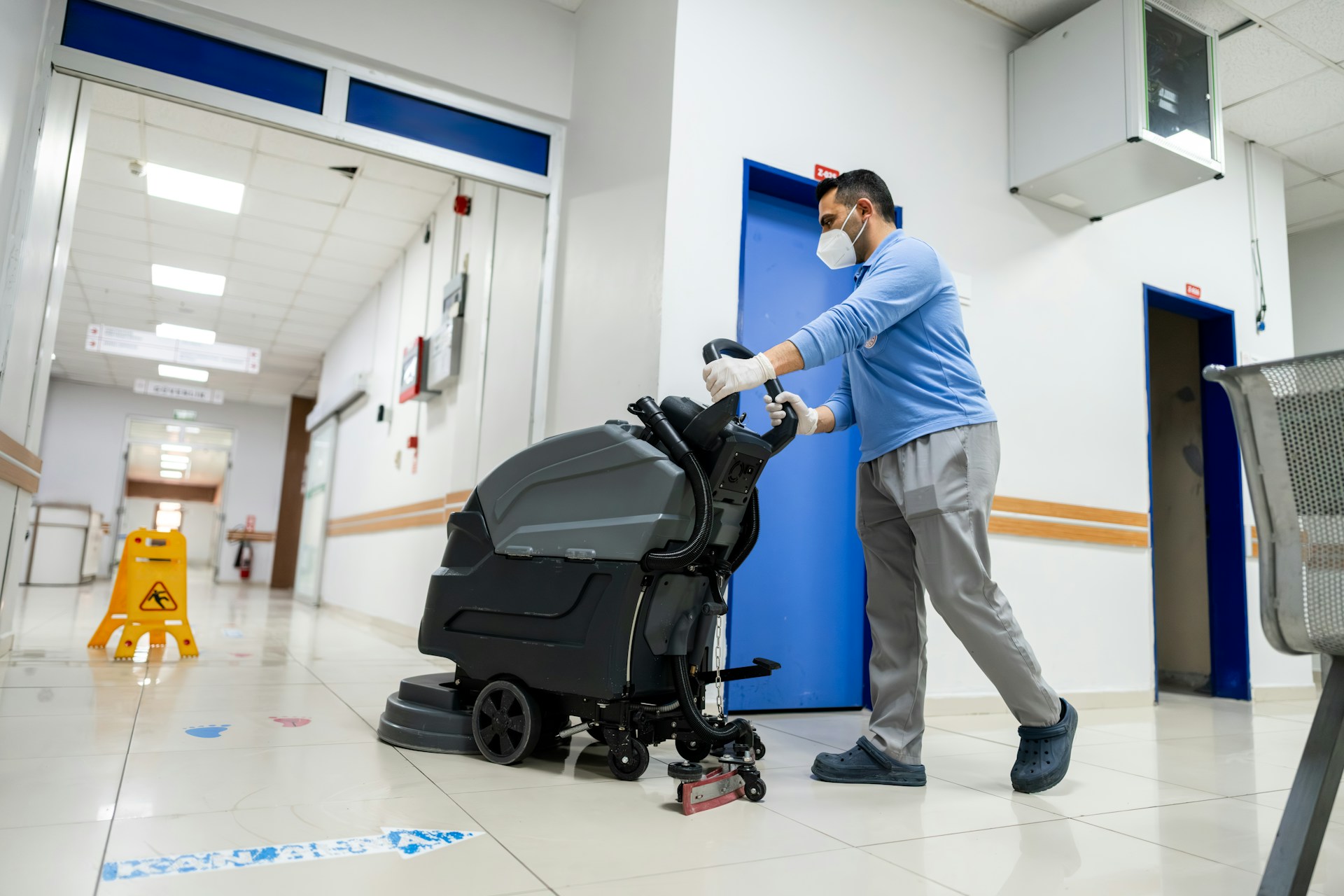
  • Floor scrubbing schedules and completion records
  • Dock cleaning and trash removal
  • Racking, mezzanine, and high areas for dust buildup
  • Touchpoint cleaning for shared surfaces and equipment

Then score how consistent cleaning is across key zones:

  • Pick aisles
  • Staging and shipping areas
  • Battery rooms and maintenance shops
  • Restrooms, breakrooms, and office areas tied to the warehouse

Many tasks, like high-reach cleaning, machine scrubbing, and post-project deep cleans, are easier and safer when handled by specialized warehouse maintenance services. Your scorecard should confirm these tasks are planned, done, and aligned with your safety rules.

Traffic Control, Housekeeping, and Leading Indicators

Forklifts, pallet jacks, tuggers, and pedestrians do not mix well without strong controls. Your traffic section should cover:

  • Clear aisle markings and pedestrian walkways
  • Visible stop signs, mirrors, and guardrails
  • Marked and enforced one-way routes where helpful
  • Any damaged barriers or unreadable floor paint

Then score behavior, not just paint on the floor:

  • Actual speed control in busy areas
  • Proper horn use at intersections
  • Use of spotters at blind corners or when backing
  • Adherence to staging zone limits so aisles stay clear

During busy peaks, congestion and temporary staging areas can create new blind spots. Temporary workers may not know your traffic rules, so include them in observations and coaching.

Housekeeping and 5S keep everything from becoming a trip hazard. On your scorecard, rate:

  • Clutter in aisles and around emergency exits
  • Trash, shrink wrap, and broken pallets on the floor
  • Access to fire equipment and electrical panels
  • Conditions around dock plates and levelers

Use simple 5S ideas:

  • Sort, remove what is not needed
  • Set in Order, mark where things go
  • Shine, clean as part of the job
  • Standardize, follow the same layout and labels
  • Sustain, verify every shift, not just before visitors arrive

To move from a one-time audit to a steady safety rhythm, track leading indicators along with traditional lagging ones. Good leading indicators include:

  • Average score by category and by area
  • PPE usage rate observations
  • LOTO verification checks completed
  • Chemical spills or near-miss reports
  • Counts of blocked exits or blocked panels found during walks

When you compare these with recordable injuries, first-aid cases, and equipment damage, patterns start to show. That is where you can act early instead of waiting for the next incident.

Turning Your Scorecard Into a Continuous Safety Engine

A scorecard only works if it changes what happens on the floor. Every audit should feed into a simple action plan. For each issue, note the priority, owner, due date, and what “good” looks like. On the next audit, re-score and confirm the fix is in place and staying that way.

If you manage multiple warehouses or distribution centers, share results across sites. Use the same categories, scales, and basic questions. When one site figures out a better way to manage PPE, or a smart layout for chemical rooms, let others copy it. Working with the same warehouse maintenance services partner across locations can make this even smoother, since they can help carry best practices from site to site.

Set a quarterly “peak readiness” review that pulls together safety, maintenance, and cleaning leaders. Look at trends in your scorecards, plan seasonal adjustments, and confirm that deep cleaning, equipment work, and layout changes line up with your busiest times.

At Cleaning Services Group, Inc., we build our commercial cleaning and facility support programs to fit into this kind of scorecard. When safety, warehouse maintenance services, and cleaning work in sync, warehouses stay safer, cleaner, and ready for whatever volume comes next.

Get Started With Your Project Today

If you are ready to improve safety, cleanliness, and efficiency in your facility, we can help you design a plan that fits your operations and schedule. At Cleaning Services Group, Inc., our experienced team provides comprehensive warehouse maintenance services tailored to high-demand environments. We focus on consistent quality, clear communication, and minimal disruption to your workflow. Reach out to our team so we can review your needs and outline a service strategy that works for you.

Future-Proof Facility Management with Commercial Building Services

Future-Proof Facility Management with Commercial Building Services

Future-Proof Comfort, Safety, and Savings in Your Facilities Facility expectations are changing fast. Clean and well-run now means healthy, safe, and...

Read More
Cut Churn: Tie Maintenance SLAs, Response Times, and Comms to Retention

Cut Churn: Tie Maintenance SLAs, Response Times, and Comms to Retention

Turn Fitness Facility Maintenance Into a Retention Engine Fitness facilities do not lose members because they are missing one more kind of treadmill....

Read More
Why Industrial Cleaning in Maine Matters When Salt Piles Up

Why Industrial Cleaning in Maine Matters When Salt Piles Up

Salt is a big part of daily life in Maine during the winter. It helps keep roads safe, sidewalks less slippery, and parking lots clear after...

Read More